

How Long Does It Take to Cure Toenail Fungus? (2026)
If If you’ve noticed a toenail turning yellow, thickening, or becoming brittle, there’s a good chance you’re dealing with a fungal nail infection, medically known as onychomycosis. So how long does it take to cure toenail fungus? The honest answer is that toenail fungus is one of the slower conditions to treat, and understanding why can help you set realistic expectations and stick with treatment long enough for it to work.
How Long Does It Take to Cure Toenail Fungus? The Short Answer
Most toenail fungus treatments take several months to a year to fully resolve. According to Mayo Clinic, oral antifungal medications are typically taken for about six months and are considered the most effective option, since they help a new, healthy nail grow in to replace the infected one. Topical treatments generally take longer, often requiring daily application for up to a year to prevent new fungal growth.
The reason treatment takes so long isn’t really about how fast the medication works. It’s about how slowly toenails grow. A fully healthy nail has to grow out from the base before the infection is considered gone, and that process simply can’t be rushed.
Why It Takes So Long: The Nail Growth Factor
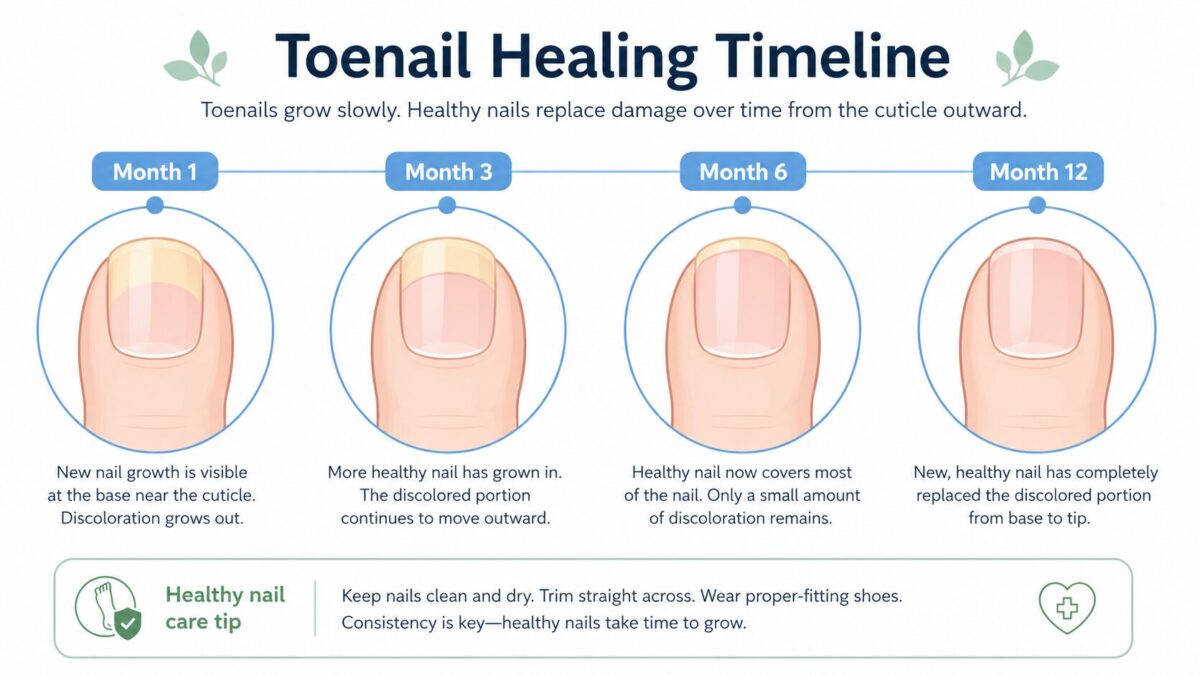
Toenails grow much slower than fingernails, often taking twelve months or more to fully replace themselves. Since antifungal treatment works by allowing new, uninfected nail tissue to grow while the old infected nail is gradually pushed out or trimmed away, the timeline for a visibly healthy nail is tied directly to that growth cycle, not just how long you take the medication.
This is also why people sometimes feel discouraged mid-treatment. The infection may already be responding to medication internally, weeks or months before it’s visible at the nail’s surface.
Factors That Affect Treatment Time
Several things influence how long recovery takes for any individual case:
- Severity of the infection — a small spot near the tip of the nail clears faster than an infection that has spread across the entire nail bed.
- Type of treatment used — oral antifungal medications tend to work faster than topical creams or medicated nail lacquers alone.
- Age — nail growth naturally slows with age, which can extend recovery time.
- Underlying health conditions — issues like diabetes or poor circulation can slow healing and increase the chance of reinfection.
- Consistency with treatment — stopping medication early, even if symptoms seem to improve, is one of the most common reasons treatment fails.
Signs the Treatment Is Working
Progress with toenail fungus is gradual and best measured by watching new nail growth rather than expecting the whole nail to look normal quickly. Signs that treatment is working typically include:
- A clear, healthy-looking strip of new nail growing in near the cuticle
- The discolored or damaged portion of the nail slowly being pushed toward the tip as it’s trimmed
- Reduced thickness in the new nail growth compared to the older, infected part
It’s normal for the nail to look “in progress” for many months. What matters most is that the new growth coming in near the base looks clear and healthy.
When to See a Doctor
While mild cases are sometimes left untreated if they aren’t causing pain, it’s worth seeing a healthcare provider if:
- The nail becomes painful, thickened, or starts to lift away from the nail bed
- The infection spreads to other toenails
- You have diabetes, a weakened immune system, or poor circulation, since fungal infections can lead to more serious complications in these cases
- Over-the-counter treatments haven’t shown any improvement after several months
A doctor can confirm the diagnosis, often with a simple nail sample, and recommend a treatment suited to the severity of the infection, since not every case responds to the same approach.
The Bottom Line: How Long Does It Take to Cure Toenail Fungus?
There’s no quick fix for toenail fungus. Most cases take anywhere from four months to a full year to resolve, depending on the treatment used and how severe the infection is. Patience and consistency matter more than speed here, since the real marker of success is healthy new nail growth, not immediate results.
This article is for informational purposes only and is not a substitute for professional medical advice. If you suspect you have a fungal nail infection, consult a healthcare provider for diagnosis and treatment options.
Frequently Asked Questions
Can toenail fungus go away on its own without treatment?
It’s unlikely. Mild cases that aren’t causing pain are sometimes left untreated, but the fungus typically doesn’t clear up by itself and can slowly spread to other nails or the surrounding skin over time.
Is toenail fungus treatment faster with oral medication or topical creams?
Oral antifungal medications are generally faster and more effective, often taken for around six months. Topical treatments work more slowly and may need to be applied daily for up to a year, especially for infections that go deeper into the nail.
Why does my nail still look damaged even though I’ve been treating it for months?
This is normal. The damaged part of the nail doesn’t heal — it has to grow out and be trimmed away while healthy new nail grows in from the base. What matters is that the new growth near the cuticle looks clear.
Can toenail fungus come back after it’s been cured?
Yes, reinfection is common even after successful treatment, particularly with continued exposure to warm, damp environments like pools, locker rooms, or damp shoes. Keeping feet dry and wearing breathable footwear helps reduce the risk.
Does toenail fungus spread to other nails or people?
It can spread to nearby toenails and, less commonly, to fingernails through repeated contact. It can also spread between people who share items like nail clippers, socks, or shoes, so avoiding shared personal items is recommended.
Sources:
- Mayo Clinic News Network — Treatment for toenail fungus isn’t always necessary
- WebMD — How to Treat Toenail Fungus