
My Honest Experience with Kerafen: Here’s What I Found After Using It for Months. (2026)
I’ll be upfront with you: I wasn’t planning to write about toenail fungus. It’s not exactly a topic you volunteer to discuss. But after spending the better part of two years trying to get rid of a stubborn fungal infection on my big toe — and failing repeatedly — I figured if sharing my experience helps even one person make a better decision, it’s worth the honesty.
So here’s my genuine account of what it was like to discover Kerafen, decide to try it, and stick with it long enough to actually have something real to say.
What Is Kerafen, and How Did I Find It?
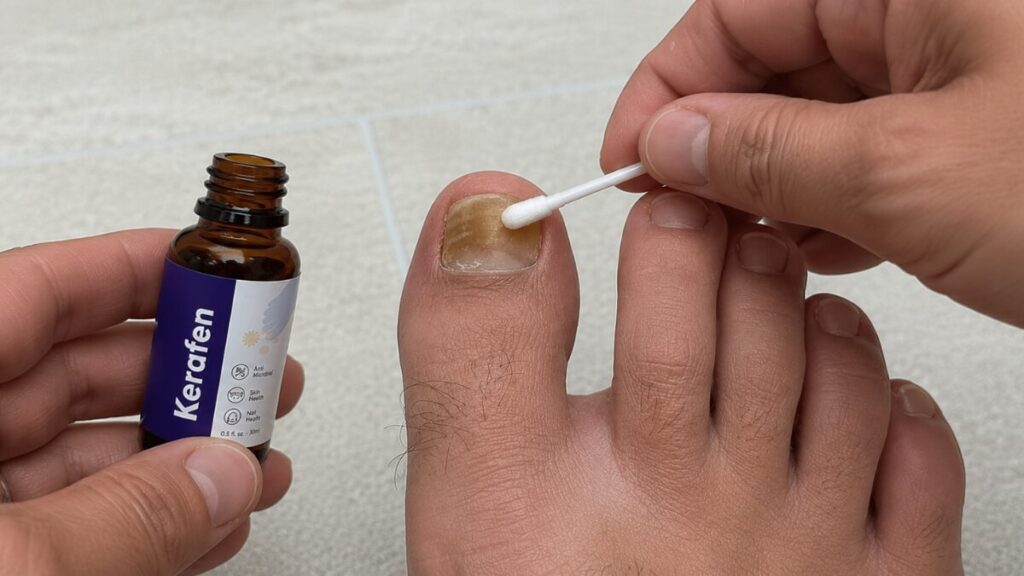
Kerafen is a topical liquid solution formulated with 15 natural ingredients — oils and herbal extracts — designed to be applied directly to affected toenails. The brand positions it as something different from the usual antifungal creams, focusing on the idea that the fungus forms a protective layer (called a biofilm) that resists standard treatments.
I found it the same way most people probably do: I was frustrated, searching online at midnight, and stumbled across it while reading about why toenail fungus is so hard to get rid of. The biofilm angle actually caught my attention because it felt more like an explanation than a sales pitch. I’d read enough to know that biofilms are a real phenomenon in microbiology — though I was skeptical about how well a topical oil blend could address that.
I ordered a two-bottle supply first. I wasn’t ready to commit to six bottles of anything I hadn’t tried.
Why I Decided to Try It (After a Lot of Skepticism)
Before Kerafen, here’s what I’d already tried: a pharmacy-brand topical cream, a prescription nail lacquer from my doctor, tea tree oil on its own, and a round of oral antifungal medication that I stopped early because of side effects.
The results? Mixed at best, disappointing at worst. My nail looked marginally better while using the prescription lacquer, but the moment I stopped, things crept back. My dermatologist told me nail fungus is notoriously difficult to clear and that patience is part of the process. That I understood. What I didn’t understand was why nothing was giving me a foothold (no pun intended) of real, lasting progress.
When I looked at Kerafen’s ingredient list, a few things stood out to me. Undecylenic Acid USP was the lead active ingredient — and that’s actually an FDA-recognized antifungal compound used in legitimate OTC antifungal products. It wasn’t just a list of exotic-sounding herbs. That gave me enough reason to try.
My First Few Weeks Using Kerafen
I won’t pretend there was a dramatic moment where I applied it and watched my nail transform overnight. That’s not how this works, and anyone telling you otherwise is setting you up for disappointment.
What I noticed in the first couple of weeks was mostly sensory. The liquid has a pleasant, slightly medicinal smell from the tea tree and menthol — not unpleasant, just distinctive. It absorbed quickly without leaving a greasy film, which I appreciated because some oil-based products feel uncomfortable in socks and shoes.
My routine was simple: I applied it twice a day after showering, once in the morning and once before bed. The instructions recommended consistency, and I tried to treat it like brushing my teeth — non-negotiable.
In weeks two and three, I noticed the skin around the nail looked less irritated. That was encouraging. The nail itself? Still the same yellowed, thickened texture I’d been dealing with. I reminded myself that nails grow slowly — about three to four millimeters per month for toenails — so visible nail change was going to take time.
What Changed Over the Following Months
By month two, I started to see something different at the base of the nail — the new growth coming in looked slightly clearer. This is the moment most people either quit or keep going, because it’s easy to dismiss as wishful thinking.
I kept going.
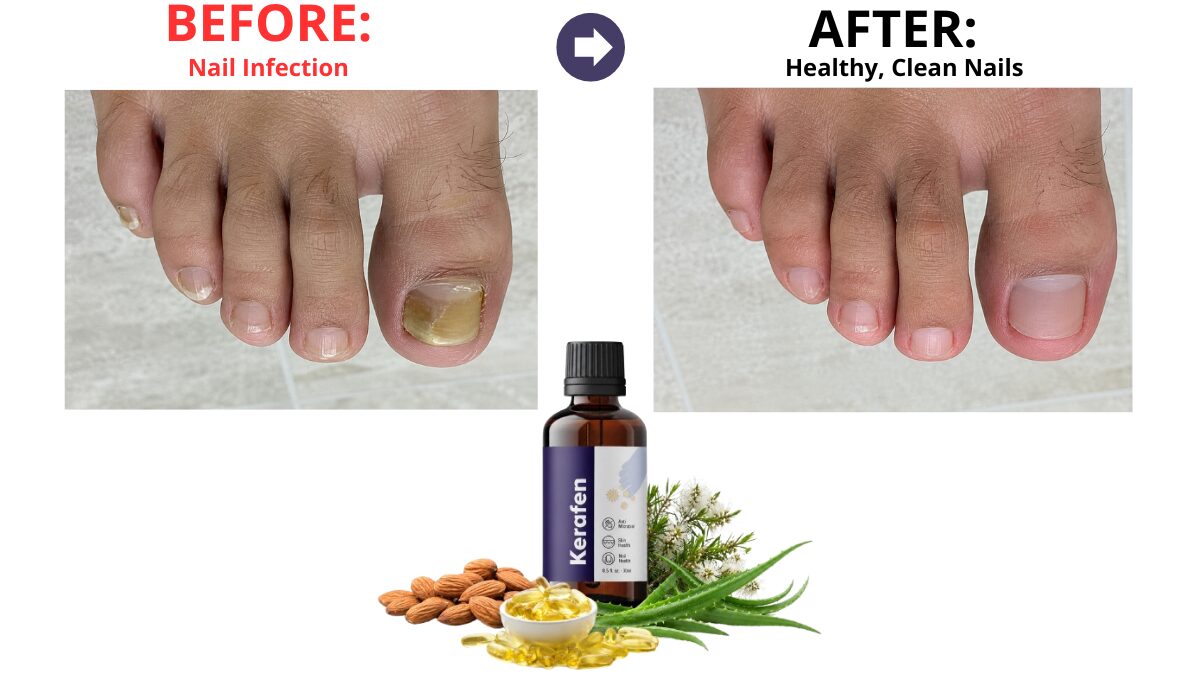
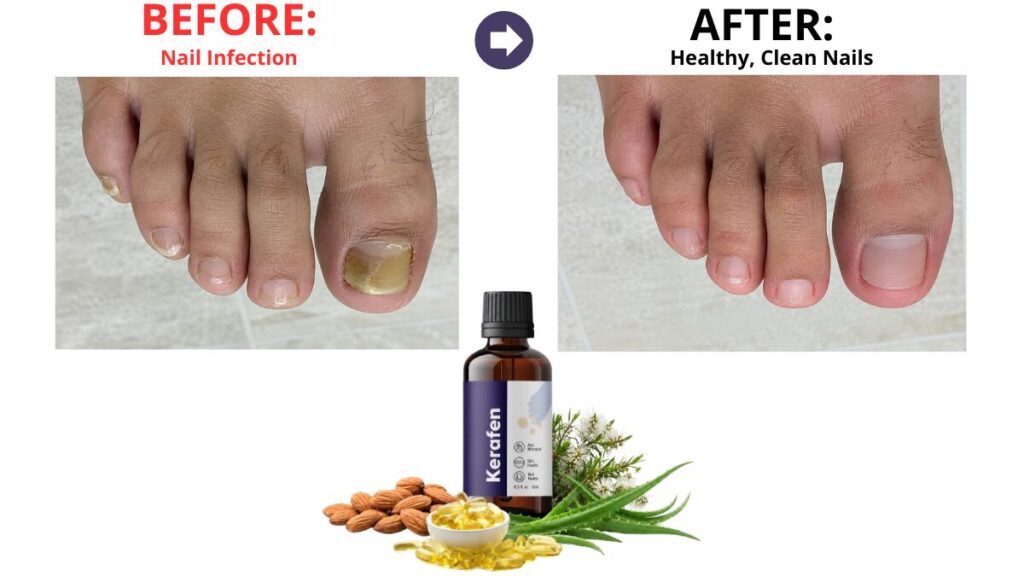
By month three, the contrast between the new growth and the affected portion was visible enough that I noticed it without looking for it. The discoloration hadn’t disappeared, but it was retreating toward the tip as the healthier nail grew in from below.
Month four brought the most noticeable shift. About half of my nail had clearly improved in color and texture. The thickening had reduced. I wasn’t hiding my feet from myself anymore.
I want to be careful here: I was also doing other things consistently. I kept my nails trimmed short and dry. I changed my socks daily. I wore breathable shoes. I used foot powder. None of those things alone would clear a fungal infection, but ignoring them would undermine any treatment. I believe Kerafen worked best as part of a full approach, not as a standalone fix.
What I Liked About the Experience
- The liquid format actually works well for nails. Creams sit on top of the nail. A liquid seeps into the edges and under the nail rim, which matters when you’re trying to reach the source of the problem.
- The ingredient list held up to scrutiny. Undecylenic Acid is the real deal. Tea tree oil has solid published research on antifungal activity. Manuka oil and clove bud oil have supporting evidence too. This isn’t a list of filler ingredients dressed up with fancy names.
- No harsh chemicals or synthetic additives. I have sensitive skin in general, and I didn’t experience any irritation, redness, or allergic reaction. The carrier oils — jojoba, almond, flaxseed — actually left the surrounding skin softer than before.
- It fit easily into my daily routine. Two minutes in the morning, two minutes at night. No complicated regimen.
What I’d Caution You About
Honesty means sharing the full picture, not just the parts that make for a good story.
It takes longer than the marketing implies. Some promotional language around the product suggests people see results in “a few weeks.” That wasn’t my experience, and based on everything I know about how nail growth works, I’d be surprised if it was most people’s experience either. I saw real progress at month two, significant change at month four. Plan for that timeline.
It’s not a medical treatment. Kerafen is a wellness product, not a pharmaceutical. The FDA hasn’t evaluated it for treating or curing nail fungus. For a mild to moderate infection like mine, that distinction was manageable. For a severe or spreading infection — especially in someone with diabetes or circulation issues — please see a doctor first.
Pricing requires thought. The per-bottle price drops significantly when you buy in bulk, but that’s a meaningful financial commitment before you know how your body responds. I started with two bottles, which was the right call for me.
Results are going to vary. My nail infection was moderate. Someone with a more advanced or long-standing infection may have a different experience.
Who I Think This Product Makes Sense For
Based on my experience, Kerafen seems best suited to someone who:
- Has mild to moderate toenail discoloration or early-stage fungal signs
- Is looking for a clean, natural topical option to use alongside good nail hygiene
- Has already tried basic OTC creams without satisfying results
- Is willing to be patient and consistent for several months
- Doesn’t have a severe infection that requires professional medical attention
Who Should Talk to a Doctor First
If any of the following apply to you, I’d genuinely recommend consulting a podiatrist or dermatologist before trying any topical product:
- Your infection is severe, painful, or spreading to multiple nails
- You have diabetes or peripheral vascular disease — nail infections in those situations need professional oversight
- You’ve had no improvement from multiple treatments over a long period
- You have a history of reactions to essential oils (tea tree, clove, camphor, lavender are all present here)
My Final Thoughts
I came into this skeptical, and I’m leaving it with a measured sense of having found something that worked for my situation. My nail isn’t perfect — there’s still some residual change at the tip that will grow out over the next month or two — but the improvement from where I started is significant.
Would I recommend Kerafen? To the right person, yes. It’s a genuinely formulated product with legitimate active ingredients and a clean composition. But I’d be doing you a disservice if I didn’t also say: set realistic expectations, be consistent, and don’t expect miracles in two weeks.
If you’re curious, start with a smaller supply, treat it as one tool in a broader approach to nail hygiene, and give it time. That’s what worked for me.
Frequently Asked Questions About Kerafen (FAQ)
How is Kerafen different from regular antifungal creams?
Kerafen comes in liquid form rather than cream, which allows it to absorb more effectively around and under the nail. Its formula also combines Undecylenic Acid — a recognized antifungal compound — with a blend of botanical oils that aim to address the nail environment as a whole, not just the surface.
How long did it realistically take to see results with Kerafen?
Kerafen comes in liquid form rather than cream, which allows it to absorb more effectively around and under the nail. Its formula also combines Undecylenic Acid — a recognized antifungal compound — with a blend of botanical oils that aim to address the nail environment as a whole, not just the surface.
Is Kerafen safe to use if I have sensitive skin?
The formula is free of common allergens, synthetic additives, and harsh chemicals. I personally have sensitive skin and didn’t experience any irritation. That said, it does contain potent essential oils like tea tree, clove bud, and camphor, so a small patch test before full use is a smart precaution.
Where should I buy Kerafen to make sure I’m getting the real product?
The safest place is the official Kerafen website. Third-party marketplaces can carry counterfeit or improperly stored versions, and purchasing through unofficial channels may also void any refund or return protection. Always check the return policy before committing to a larger order.
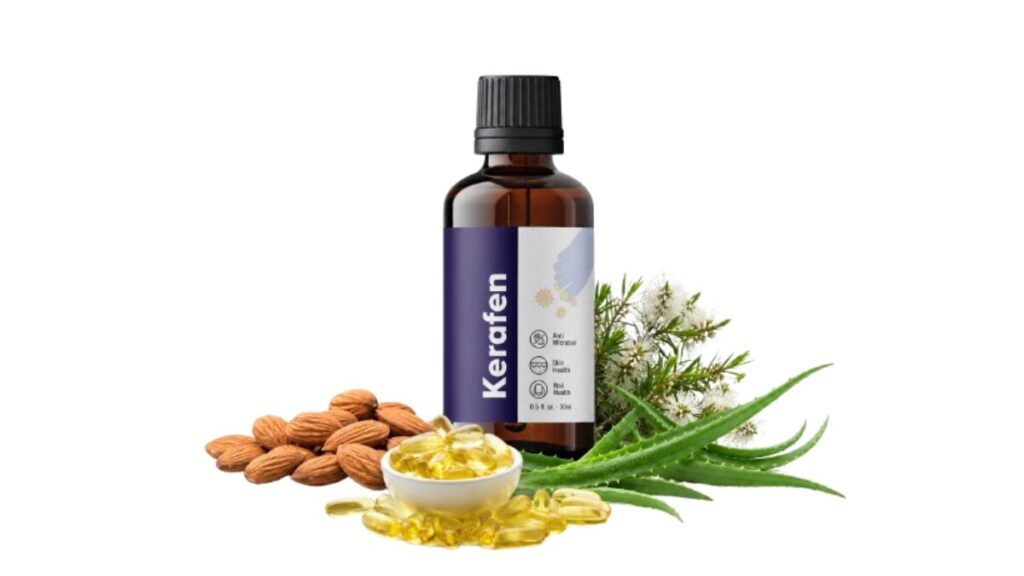
Claim Your Discounted Kerafen Below While Stocks Last
What our customers say 4.94 / 5
Based on 23,622 reviews