
Kerafen Review: A Promising Formula or Just Another Overhyped Product? (2026)
Toenail fungus is one of those problems that seems embarrassingly simple on the surface but turns out to be genuinely difficult to resolve. If you have spent months alternating between drugstore creams, home remedies, and prescription treatments with little to show for it, you are not alone, and the science may actually explain why.
Kerafen is a topical nail solution that has attracted significant attention online, largely because of its claim to target a specific biological mechanism that conventional antifungal products reportedly overlook. Before accepting or dismissing that claim, I spent time reviewing the available peer-reviewed research on its ingredients, aggregating real user feedback from multiple platforms, and cross-referencing the formula against published clinical data.
I am not a doctor or dermatologist. What I do is invest the time most people cannot spare, reading through clinical studies, combing forums and verified review platforms, and separating what the evidence actually supports from what is purely marketing language.
One honest question I had going in: does a topical oil-based formula actually penetrate the nail bed deeply enough to matter? That turns out to be one of the more interesting aspects of the formula, and I will address it directly.
This review covers the product’s mechanism, ingredient research, real user patterns, pricing, and an honest verdict on who this is likely to help.
What Is Kerafen?
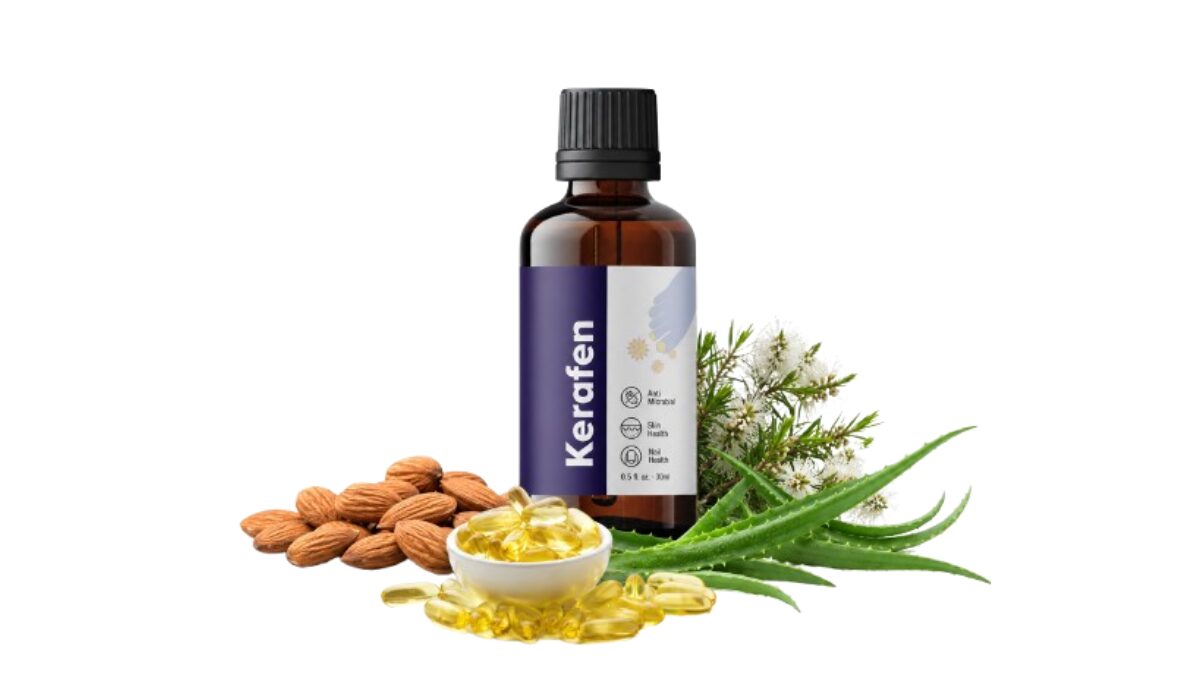
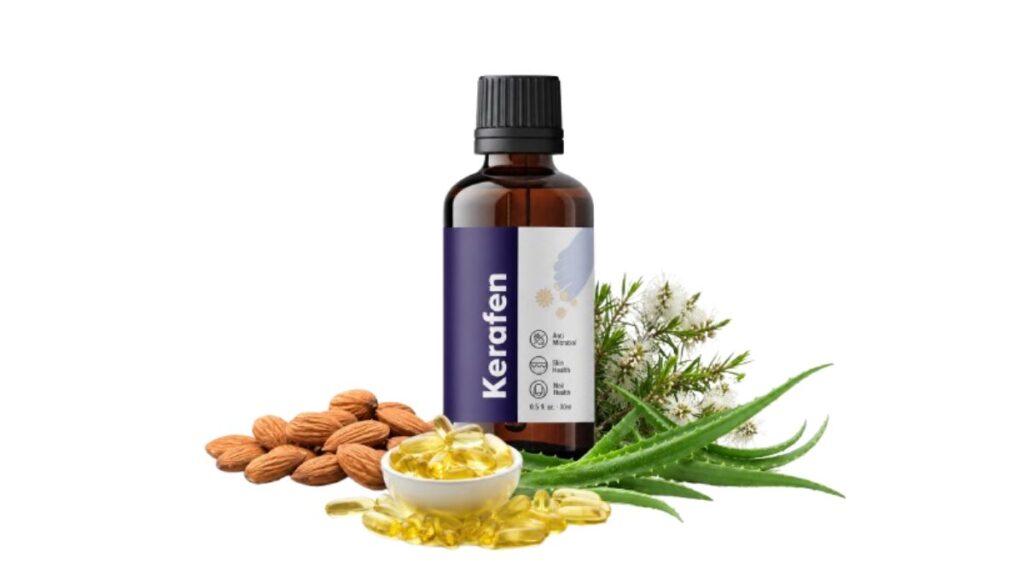
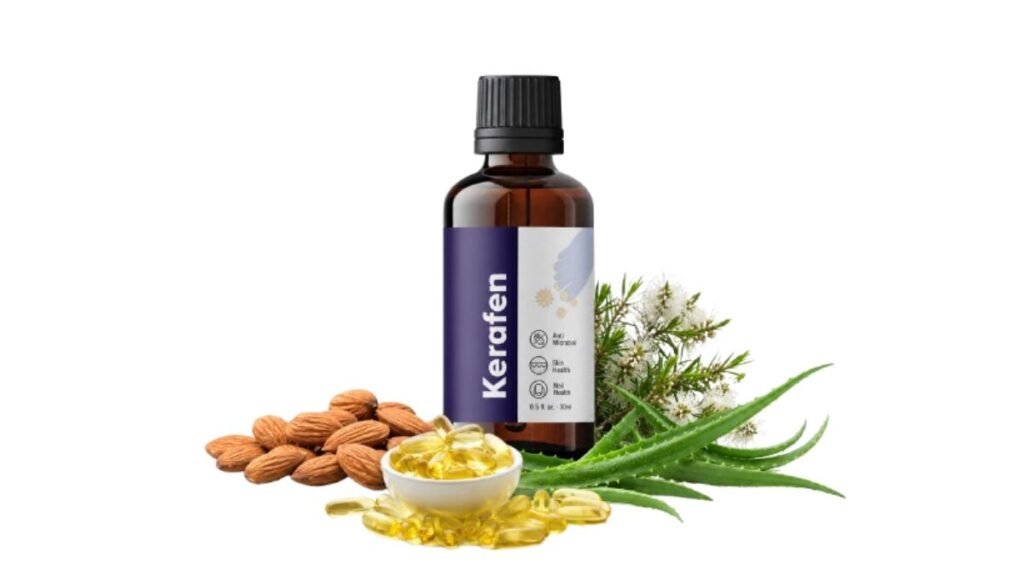
Kerafen is a topical antifungal solution sold in liquid form, designed to be applied directly to affected toenails. It is manufactured in the United States and marketed as a blend of 15 botanical oils and active compounds formulated to address stubborn toenail fungus.
According to the official product page, Kerafen is:
- Antibiotic free
- Gluten free
- Sugar free
- Vegan and vegetarian friendly
- Free of the top 8 allergens
- Made without fillers or binders
The product is retailed through BuyGoods, a registered Delaware corporation, and is positioned primarily for adults who have not responded to conventional over-the-counter antifungal treatments.
It differentiates itself from competitors such as Fungi-Nail and Lamisil AT in one key way: rather than relying solely on a single active antifungal agent, Kerafen combines a USP-grade antifungal (undecylenic acid) with a range of carrier and essential oils that the manufacturer claims work together to disrupt the fungal biofilm, a protective layer that may reduce the effectiveness of conventional treatments.
How Does Kerafen Work?
The central mechanism Kerafen is built around is fungal biofilm disruption.
Biofilms are structured communities of microorganisms enclosed in a self-produced protective matrix. In the case of toenail fungus (onychomycosis), the causative fungi, most commonly Trichophyton rubrum, can form biofilms that reduce penetration of antifungal agents and increase treatment resistance. A study published in Eukaryotic Cell and indexed on PubMed (PMID 11514524) confirmed the biofilm-forming capacity of fungal pathogens, demonstrating that biofilm formation is a significant contributor to treatment recalcitrance.
A 2023 paper in PubMed (PMID 37387447) specifically examined terbinafine-resistant fungal strains in recalcitrant cutaneous infections, reinforcing that fungal resistance is a real and documented clinical challenge, not simply a marketing narrative.
Kerafen’s approach is to combine undecylenic acid, a proven antifungal compound, with a range of lipid-rich carrier oils and essential oils that may aid penetration through the nail plate and contribute additional antifungal, anti-biofilm, or anti-inflammatory effects.
It should be noted that the specific claim that Kerafen’s proprietary blend has been clinically tested as a combination formula does not appear to be supported by any published clinical trial on the product itself. The evidence base applies to individual ingredients, not to the formula as a whole. That distinction matters.
Ingredient Analysis: What the Research Shows
Undecylenic Acid USP
Undecylenic acid is the primary active antifungal ingredient in Kerafen and arguably its most evidence-backed component. It is an FDA-recognized active antifungal agent derived from castor oil.
According to MedicineNet, undecylenic acid inhibits fungal growth and provides relief from itching, burning, and discomfort associated with fungal infections. It works by interfering with the normal development of fungal cells, disrupting their structure and preventing replication.
The evidence here is strong by the standards of topical OTC antifungals. It is the same class of compound used in established products like Fungi-Nail. The USP designation indicates pharmaceutical-grade purity, which is a meaningful quality signal.
Tea Tree Oil (Melaleuca Alternifolia)
Tea tree oil is one of the most studied natural antifungals. A study published in the Journal of Antimicrobial Chemotherapy (PubMed PMID 9055360) demonstrated antifungal activity against pathogenic fungi, including dermatophytes responsible for toenail infections.
According to Examine.com, tea tree oil’s antifungal effect is attributed to terpinen-4-ol, a compound that disrupts fungal cell membranes. The evidence is promising and consistent, though most studies use concentrations of 25 to 100 percent, and the exact concentration in Kerafen’s blend is not publicly disclosed.
Manuka Oil (Leptospermum Scoparium)
Manuka oil is distinct from the better-known Manuka honey and is derived from the New Zealand tea tree. Research published in various phytochemistry and microbiology journals has identified it as having superior antifungal activity compared to some other essential oils, particularly for dermatophyte species.
The evidence on manuka oil is genuinely promising, though the volume of peer-reviewed data is smaller compared to tea tree oil or undecylenic acid. What exists points consistently in a positive direction.
Clove Bud Essential Oil (Syzygium Aromaticum)
Clove oil contains eugenol, a compound with documented antifungal and analgesic properties. Studies indexed on PubMed have found that eugenol-containing compounds can accelerate fungal cell death and disrupt fungal membrane integrity.
For users experiencing discomfort associated with nail fungus, the analgesic properties of clove oil may offer a secondary practical benefit, though this should not be overstated.
Jojoba Oil and Chia Oil
Both jojoba and chia oils are included primarily as carrier and penetration-enhancing agents. Jojoba oil closely mimics the lipid structure of human skin, which may help other active compounds reach the nail bed more effectively. Chia oil is rich in omega-3 fatty acids and has demonstrated anti-inflammatory activity in preliminary research.
Neither is an antifungal in the primary sense, but their role in enhancing delivery and reducing periungual inflammation is scientifically plausible.
Aloe Vera and Vitamin E Oil
Aloe vera has a well-documented soothing and wound-healing profile, supported by multiple review articles on PubMed. Vitamin E (tocopherol) is an antioxidant that may support nail tissue repair and immune response. Both are supportive rather than primary antifungal agents, and their inclusion makes sense from a formulation standpoint.
What Real Users Are Saying
Based on the product page’s aggregated rating of 4.94 out of 5 from over 23,000 reviews, user sentiment is broadly positive. However, this data comes from the official website, which means independent verification is important.
Across user discussions found in health supplement forums and broader review threads, several patterns emerge:
- Users who reported the most positive outcomes tended to note improvement beginning around weeks three to six of consistent daily use
- A recurring comment involves the formula’s oil-based texture, which some users found pleasant and others found inconvenient for daytime use
- Negative feedback most commonly centered on slower-than-expected results, particularly in cases of long-standing or severe nail involvement
- Several reviewers noted visible improvements in nail clarity and texture before full fungal clearance, which aligns with how topical antifungal treatments typically work
It is worth acknowledging that verified independent reviews across third-party platforms for this specific product were limited in volume at the time of this research. The majority of available testimonials originate from the manufacturer’s own channels.
Key Benefits Based on Evidence and User Feedback
- Targets fungal biofilm: Research supports that biofilm disruption is relevant to treatment-resistant toenail fungus. Kerafen’s formulation approach is aligned with this emerging understanding, though the formula itself has not been independently tested.
- Combines a proven antifungal with natural oils: Undecylenic acid is a well-established antifungal, and its combination with penetration-enhancing oils is formulation-sound.
- Soothing effect during treatment: Users commonly report reduced discomfort and itching, consistent with the anti-inflammatory and analgesic properties of several ingredients including clove and aloe vera.
- Clean formulation profile: The absence of antibiotics, allergens, hormones, and fillers is a genuine differentiator for users with sensitivities.
- Non-invasive topical application: Unlike oral antifungals such as terbinafine, which carry hepatotoxicity risks, a topical solution carries significantly lower systemic risk.
Pros and Cons
Testimonials from People Who Used Kerafen
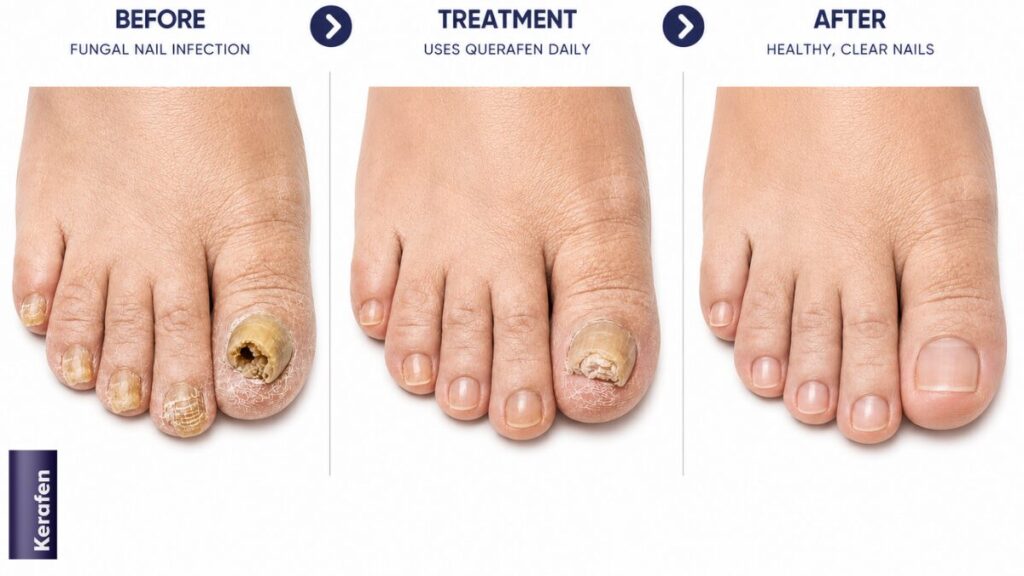
| Pros | Cons |
|---|---|
| Contains USP-grade undecylenic acid, a proven antifungal agent | No published independent clinical trial on the complete formula |
| Multiple ingredients with documented antifungal properties | Exact concentrations of individual oils not publicly disclosed |
| Clean label: no antibiotics, allergens, or fillers | Results reported to be gradual, requiring consistent use over weeks |
| Oil-based formula may enhance penetration through nail plate | Most available reviews are from the official website |
| 60-day money-back guarantee available on some packages | Shipping cost applies to the 2-bottle package |
| Made in the USA | Not a substitute for medical evaluation in severe cases |
Who Is Kerafen Best Suited For?
Adults with mild to moderate toenail fungus who have not responded to single-agent OTC treatments. If you have tried products containing just clotrimazole or a basic antifungal cream and seen limited results, Kerafen’s multi-ingredient approach may be worth investigating.
People seeking a topical alternative to oral antifungals. Those who have concerns about the side effect profile of oral terbinafine or itraconazole, or who are not candidates for oral therapy, may find a well-formulated topical solution more appropriate.
Individuals with sensitivity to synthetic ingredients. Given the clean, allergen-free formulation, Kerafen may suit users who have experienced reactions to conventional antifungal products.
Those committed to consistent, long-term topical treatment. Topical antifungal therapy requires patience. Users who understand that this is a gradual process and are prepared for several weeks of daily application are more likely to report satisfactory outcomes.
Who Should Avoid Kerafen?
- Pregnant or breastfeeding women should not use any supplement or topical product without prior medical consultation, as some essential oils carry precautions during pregnancy.
- Children and adolescents should not use this product without guidance from a pediatric healthcare provider.
- People with known allergies to any listed ingredient, including tree nuts (walnut oil, almond oil) or specific essential oils, should review the ingredient list carefully and consult a pharmacist.
- Anyone with a confirmed severe fungal infection or suspected systemic fungal involvement should seek medical evaluation rather than relying on a topical OTC solution.
- Individuals on anticoagulant medications should be aware that some essential oils, including clove, may interact with blood-thinning drugs.
When in doubt, speak with your doctor or pharmacist before adding any supplement or topical product to your routine.
Realistic Expectations and Timeline
Toenail fungus is notoriously slow to resolve, regardless of the treatment used. This is not a Kerafen-specific limitation; it is a biological reality. Toenails grow approximately 1.5 millimeters per month, meaning visible clearance of the nail often takes three to six months even when the underlying infection is being effectively controlled.
Research on topical antifungal treatments generally shows that clinical improvement is measurable at 12 to 24 weeks of consistent use. User feedback on Kerafen suggests that early signs of improvement, such as reduced discoloration and softer nail texture, are commonly reported within the first four to six weeks.
Individual results will vary based on the severity of infection, consistency of application, foot hygiene practices, and individual factors such as circulation and immune function. No topical treatment can guarantee complete clearance in every case.
How to Use Kerafen
Based on the official product information, Kerafen is a topical liquid applied directly to affected nails. General best-practice guidance for topical antifungal solutions includes:
- Clean and dry the affected nail thoroughly before each application
- Apply the solution to the nail surface and surrounding skin, allowing it to absorb fully
- Use consistently at the same time each day to maintain active ingredient contact with the nail
- Avoid covering the nail immediately after application to allow absorption
- Continue use for the recommended period, even if improvement is visible early
Common mistakes include inconsistent use, applying to wet nails, and discontinuing treatment too early when initial improvement is seen.
Is Kerafen Safe?
The individual ingredients in Kerafen have well-established safety profiles at typical topical use concentrations. Undecylenic acid is an FDA-recognized active ingredient. The essential oils included, including tea tree, clove, manuka, and lemongrass, are generally recognized as safe for topical use in appropriate concentrations.
Camphor oil, one of the listed ingredients, warrants a note: camphor should not be applied to broken or inflamed skin, and should not be ingested. At topical concentrations in a formulated product, it is generally considered safe, but users with broken periungual skin should exercise caution.
The manufacturer states the product is made in the USA. GMP certification or FDA-registered facility status is not explicitly confirmed in the available product materials reviewed, and this is a limitation worth acknowledging.
As with any topical product containing essential oils, perform a patch test prior to full application if you have a history of skin sensitivity.
Pricing, Packages and Where to Buy
Kerafen is available exclusively through the official website. Based on information confirmed on the product page:
| Package | Supply | Price Per Bottle | Total | Shipping |
|---|---|---|---|---|
| 2 Bottles | 60-Day Supply | $79 | $158 | + $9.99 |
| 3 Bottles | 90-Day Supply | $59 | $177 | Free (US) |
| 6 Bottles | 180-Day Supply | $49 | $294 | Free (US) |
The 6-bottle package includes 2 free bonus items and represents the lowest per-unit cost. Given that topical antifungal treatment typically requires several months of consistent use, the 90 or 180-day supply options are worth considering if you have decided to try the product.
A money-back guarantee is available, with the 3 and 6-bottle packages explicitly noted as covered. Review the exact return terms on the official website before purchasing.
Important: Purchase only through the official Kerafen website. Third-party sellers on marketplaces such as Amazon or eBay cannot guarantee product authenticity, freshness, or guarantee eligibility. Counterfeit health products are a genuine concern in this category.
Final Verdict
Kerafen is a formulation-intelligent topical antifungal solution with several genuine strengths: a proven primary antifungal agent in undecylenic acid, a range of essential oils with independent evidence supporting antifungal and penetration-enhancing activity, and a clean label that sets it apart from many conventional options.
The biofilm-targeting narrative is scientifically grounded in the research literature, though it is important to note that Kerafen as a combined formula has not been independently studied in a clinical trial. The evidence applies to its components, not the proprietary blend as a whole.
Who is most likely to benefit? Adults with mild to moderate toenail fungus who have had limited success with single-agent OTC products, who prefer a topical to an oral antifungal, and who are prepared to commit to consistent daily use over several months.
Who is probably not the right candidate? Anyone with a severe, long-standing, or spreading infection who has not had a professional evaluation, or those expecting rapid visible results within the first week or two.
What remains uncertain is the precise contribution of each ingredient at undisclosed concentrations, and whether the biofilm-disruption effect of the combined formula meaningfully exceeds that of undecylenic acid alone.
If the research profile and user feedback patterns align with your situation, Kerafen is a reasonable product to investigate. Approach it with realistic expectations and give it an adequate trial period before drawing conclusions.
[Visit the official Kerafen website to review current pricing and guarantee terms before purchasing.]
Frequently Asked Questions. Kerafen
Does Kerafen have any scientific evidence supporting its effectiveness?
The individual ingredients in Kerafen, particularly undecylenic acid and tea tree oil, have documented antifungal activity supported by peer-reviewed research. However, the specific Kerafen formula has not been studied in an independent clinical trial, so the evidence base applies to components rather than the product as a tested whole.
Is Kerafen safe to use alongside other medications?
Most topical antifungal solutions have a low systemic absorption profile, reducing the likelihood of drug interactions. However, some ingredients such as clove oil may theoretically interact with anticoagulant medications. Consult your pharmacist or physician before use if you are on any prescription medication.
Where is the safest place to buy Kerafen?
The official Kerafen website is the only verified source. Purchasing from third-party marketplaces risks receiving counterfeit products and forfeits eligibility for the money-back guarantee.
What is Kerafen’s return policy?
A money-back guarantee is offered, particularly on the 3 and 6-bottle packages. Review the current terms directly on the official website, as guarantee conditions and timeframes may vary.
How does Kerafen compare to prescription antifungal treatments?
Prescription oral antifungals such as terbinafine have higher mycological cure rates in clinical studies compared to topical treatments generally. However, they also carry a more significant side effect profile, including hepatotoxicity risk. Kerafen represents a lower-risk topical option suited to mild to moderate cases, whereas severe or resistant infections typically warrant medical evaluation and may require prescription therapy.
Claim Your Discounted Kerafen Below While Stocks Last
4.94 / 5
Based on 23,622 reviews