
DentaBiome Review 2026: FabM Claims Exposed (What the Science Actually Says)
What Is DentaBiome?
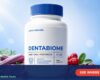
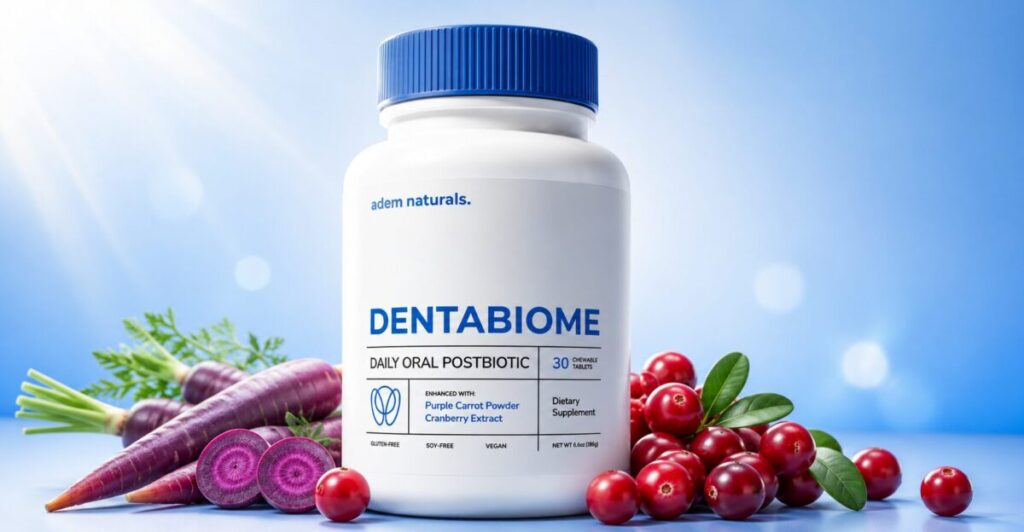
DentaBiome Review is a chewable oral postbiotic supplement, sold in a Berry Frost flavor, marketed as a daily-use product to support gum health, fresher breath, cavity resistance, and enamel strength. Instead of live bacteria (like a typical probiotic), it delivers postbiotics — the beneficial compounds bacteria produce, rather than the bacteria itself.
It’s manufactured in the United States at an FDA-registered, GMP-certified facility, and is marketed as vegan, non-GMO, and free of the most common allergens.
The FabM Enzyme Claim: Fact-Checked
DentaBiome’s entire marketing narrative centers on something called the FabM enzyme, described as a “rogue enzyme” that builds an “acid-lock” shielding harmful bacteria from brushing, flossing, and mouthwash.
Here’s what’s real: FabM is a genuine, peer-reviewed enzyme first described by researcher Charles Rock in 2002, and later studied at the University of Rochester, where a team found that disabling the FabM gene made Streptococcus mutans dramatically more vulnerable to acid damage. This research was significant enough to earn a multimillion-dollar grant from the National Institute of Dental and Craniofacial Research.
Here’s the catch: those studies involved knocking out the FabM gene entirely in lab-engineered bacteria. No study has tested whether a chewable supplement lowers FabM activity in a living human mouth. So while FabM itself is legitimate science, the “acid-lock” story is best understood as the brand’s marketing narrative built around a real enzyme — not a demonstrated effect of this specific product.
That distinction matters, and it’s the single most important thing to understand before spending money on this supplement.
DentaBiome Ingredients: Separating Real Research From Brand Claims
| Ingredient | What It’s Claimed to Do | What Independent Research Actually Shows |
|---|---|---|
| Dual-Strain L. Plantarum | “Eradicates S. mutans by 99.9%” | Some published research links L. plantarum postbiotics to reduced plaque biofilm formation — but the 99.9% figure is a brand claim, not an independently verified statistic for this product |
| L. Salivarius | Reduces bad breath | Documented in research for producing antimicrobial compounds and reducing volatile sulfur compounds linked to halitosis |
| L. Rhamnosus | “Inhibits gum disease bacteria by 36%+” | Long track record in oral health research, including studies on reduced cavity risk in children; the specific 36% figure isn’t independently sourced |
| BioFresh™ Complex | “47% bacteria reduction in 24 hours, 60% in 8 days” | Proprietary blend; these percentages are brand-reported and haven’t appeared in independent peer-reviewed trials |
| Xylitol | Reduces cavity-causing bacteria | One of the best-supported ingredients on this list — has an approved EFSA health claim for reducing cavity risk |
| Cranberry Extract | Disrupts bacterial biofilm | Published research (Frontiers in Microbiology) supports cranberry polyphenols disrupting S. mutans’ acid-producing activity |
| Purple Carrot Powder | Anti-inflammatory, disrupts bacterial signaling | Antioxidant compound with some supporting research, though less robust than the ingredients above |
The pattern here is consistent: the individual ingredients generally have real research behind them in isolation. The specific numbers used in DentaBiome’s marketing (99.9%, 47%, 60%, 36%) are the brand’s own reported figures, not results from an independent clinical trial of the finished tablet.
Does DentaBiome Actually Work?
Based on the ingredient research, DentaBiome’s formula is reasonably well-constructed for a category that’s often filled with unproven ingredients. Xylitol, L. Rhamnosus, and cranberry extract in particular have solid independent research behind their oral health benefits. Postbiotics as a delivery method also have a legitimate scientific rationale — they’re more stable than live probiotic bacteria, which can be broken down by saliva before they have a chance to work.
What’s missing is a completed clinical trial on the finished DentaBiome tablet itself. That’s common in the supplement industry, not unique to this brand, but it’s the key reason to treat “gums stopped bleeding in three days” style testimonials with healthy skepticism rather than as a guarantee of your own results.
Pricing
DentaBiome is sold directly through its official website in three package sizes:
- 2 bottles (60-day supply): $79/bottle — $158 total
- 3 bottles (90-day supply): $69/bottle — $207 total, plus two bonus guides
- 6 bottles (180-day supply): $49/bottle — $294 total, plus two bonus guides and free shipping
The brand recommends a 3–6 month supply, which lines up with how long postbiotic and probiotic-style supplements generally need to show any measurable effect on oral bacteria balance. All orders come with a 60-day money-back guarantee.
Who Might Consider DentaBiome (and Who Shouldn’t)
DentaBiome may be worth considering if you deal with occasional bad breath, mild gum sensitivity, or want to add an oral-microbiome-focused supplement to your existing brushing and flossing routine.
It’s not a substitute for dental care. If you have active gum disease, a dental abscess, persistent pain, or a condition like diabetes that affects healing, see a licensed dentist rather than relying on a supplement as a first response.
Frequently Asked Questions
Is DentaBiome legit or a scam?
DentaBiome is a real, manufactured supplement sold by an identifiable company with a stated money-back guarantee. It’s not a “scam” in the sense of not existing or not shipping — but several of its marketing statistics are brand-reported rather than independently verified, so it’s worth evaluating with realistic expectations rather than taking every claim at face value.
How is DentaBiome different from a regular probiotic?
Regular probiotics contain live bacteria that need to survive your saliva to work. DentaBiome uses postbiotics — the compounds those bacteria produce — which don’t need to survive anything because they’re already active. This is a legitimate scientific rationale, though it applies to postbiotics generally, not exclusively to this brand.
How long does it take to see results with DentaBiome?
The brand’s own marketing suggests results within days, but oral microbiome changes generally take weeks of consistent use to become noticeable, which is more in line with how postbiotic and probiotic research on other formulas has been measured.
Are the FabM enzyme claims true?
The FabM enzyme itself is real and has been studied in peer-reviewed research. However, that research involved genetically disabling the enzyme in lab bacteria, not testing a chewable supplement. The “acid-lock” framing is the brand’s marketing interpretation of that underlying science.
Is DentaBiome safe to use?
The ingredients are generally recognized as safe and the product is made in a GMP-certified facility. As with any supplement, check with your dentist or doctor first if you’re pregnant, nursing, or managing an existing health condition.
The Bottom Line
DentaBiome combines several ingredients with genuine research support — particularly xylitol, L. Rhamnosus, and cranberry extract — inside a postbiotic delivery model that has a real scientific rationale. Where it falls short of its own marketing is the lack of independent clinical testing on the finished product, and statistics (99.9%, 47%, 36%) that come from the brand itself rather than outside researchers. If you go in with realistic expectations and treat it as a complement to — not a replacement for — regular dental care, it’s a reasonably well-formulated option in a crowded category.
This article is for informational purposes only and does not constitute medical or dental advice. Consult a licensed dentist before starting any new oral health supplement.
- Rock CO (2002). Fatty acid biosynthesis in oral streptococci and the role of the FabM enzyme — St. Jude Children’s Research Hospital
- Quivey RG et al. (2008). FabM enzyme and acid tolerance in Streptococcus mutans — University of Rochester Medical Center
- Al-Ahmad A et al. (2025). Postbiotics and dental caries: A systematic review — PMC, NIH (PMC11894266)
- Chen YH et al. (2022). Xylitol-containing chewing gum reduces cariogenic bacteria in dental plaque — PubMed (PMID: 35631309)
- Philip N et al. (2018). Cranberry polyphenols and oral health — Frontiers in Microbiology (PMID: 29306222)
- Stensson M et al. (2014). Oral administration of Lactobacillus reuteri and caries prevalence — Caries Research (PMID: 24296746)